
FIFTY ONE COMMERCIAL PROGRAMMINGS OF MODERN SHOPPING MALLS
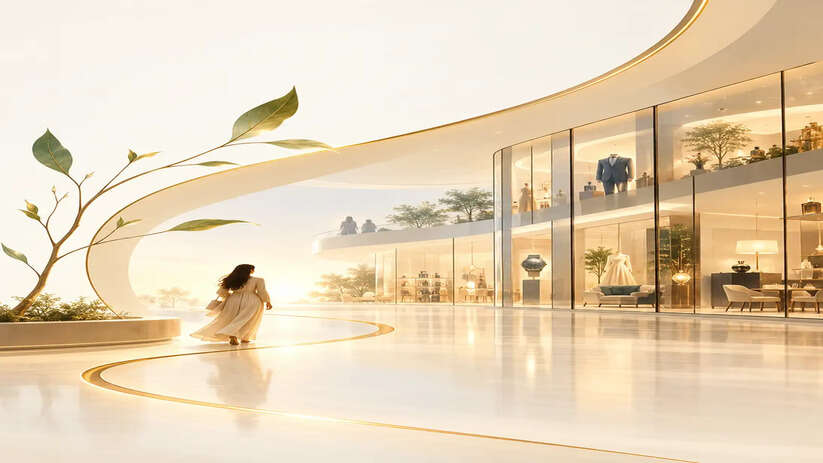
Where Desire Becomes Visible
A shopping mall gives desire a physical address. What might otherwise remain a passing thought-a better shirt, a different fragrance, a room remade, an evening rescued from boredom-appears behind glass, under light, within reach of the hand.
Inside, longing acquires texture. It becomes the grain of leather, the weight of a watch, the cool surface of a stone, the fall of fabric across a shoulder, the smell of bread, the cold edge of a skating rink. The visitor can approach it, inspect it, try it on, ask its price and decide whether to carry it home.
This concept reads the modern shopping mall through desire. It proposes fifty-one visible desires, expressed through fifty-one commercial programmings: organised offers through which people can purchase goods, obtain services, enter experiences and briefly inhabit a different version of their day.
These desires are not a complete inventory of the human heart. They are a practical vocabulary for what a shopping destination can place before the eye and make available for money.
The Visitor Arrives Before the Customer
People arrive carrying more than purchasing power. They bring fatigue, curiosity, embarrassment, anticipation, obligation, loneliness, affection and the restless wish that something might feel different before they leave.
A person looking at a suit may be rehearsing an interview. A parent studying a toy may be deciding how much happiness the afternoon can afford. Someone choosing furniture may be imagining a household that has not yet begun, while someone sitting alone over coffee may be buying the simple permission to remain somewhere without explanation.
The commercial planner cannot claim to know every private motive. The task is more modest and more useful: to recognise the visible offers through which different intentions can find expression, and to arrange them without mistaking every visitor for the same customer.
Some desires return quickly, almost by habit. Others gather slowly around a wedding, a journey, a promotion or the making of a home. A coherent mall brings these different rhythms into conversation rather than depending on every visit to become a grand purchase.
The Fifty-One Visible Desires
The following register gives each desire a commercial expression. The numbering is fixed, but the words beneath each entry are interpretive: they explain what the offer may mean without pretending that every customer experiences it in the same way.
01. The Desire to Wear a Different Self - Multi-Category Designer Fashion
Designer fashion places a possible self before the mirror. A jacket, dress or coordinated collection becomes something the visitor can inhabit for a moment before deciding whether that image belongs outside the fitting room.
02. The Desire to Carry Something That Feels Like One’s Own - Leather Goods, Handbags and Small Accessories
A bag rests against the body and travels through the ordinary day. Its compartments, stitching, handle and weight make ownership intimate, turning an accessory into a companion of movement.
03. The Desire to Stand Composed - Classic Menswear and Tailoring
Tailoring gives visible form to composure. The shoulder is adjusted, the sleeve corrected, the cloth brought closer to the body until the wearer can judge not merely the garment, but how he stands within it.
04. The Desire to Belong to the Present - Contemporary, Premium and Bridge Apparel
Contemporary apparel offers a way of entering the visual language of the moment. Its racks and mannequins make change accessible through clothes that can be worn into work, friendship, travel and ordinary public life.
05. The Desire to Feel at Ease - Leisurewear, Lifestyle Sportswear and Denim
Some clothing is chosen for the relief it promises. Soft fabric, familiar denim and unforced shapes allow the visitor to imagine a body less constrained by ceremony or display.
06. The Desire to Walk Differently - Specialist Footwear
Footwear is tested through movement rather than sight alone. A few steps across the shop floor reveal the bargain between appearance and comfort, between the shoe one admires and the shoe one can actually live in.
07. The Desire to Dress a Growing Life - Children’s Fashion and Accessories
Children’s clothing makes growth visible in small sizes and rapidly changing needs. For the accompanying adult, the purchase can hold practicality and affection together: something that fits today, survives tomorrow and allows the child a little room to become.
08. The Desire to See Clearly and Be Seen Clearly - Eyewear and Optical Retail
Eyewear sits at the meeting point of function and identity. Frames alter a face immediately, while lenses and optical services answer the less theatrical but essential need to see.
09. The Desire to Leave Prepared - Luggage and Travel Accessories
A suitcase makes departure tangible before the journey begins. Its wheels, handles, locks and interior spaces invite the traveller to imagine movement with fewer obstacles and a greater sense of readiness.
10. The Desire to Be Remembered at a Ceremony - Bridal and Ceremonial Clothing
Ceremonial clothing is chosen under the pressure of an occasion. Fabric, fitting and embellishment become part of how a person wishes to appear in a room, in a photograph and in the memory of others.
11. The Desire to Express a Less Familiar Self - Contemporary Regional and Experimental Designer Wear
Experimental and regional design can unsettle familiar expectations of dress. An unexpected silhouette or reworked tradition allows the wearer to consider a form of expression that is neither entirely inherited nor entirely conventional.
12. The Desire to Touch Continuity - Heritage Textiles, Traditional Garments and Textile Accessories
A woven border, a shawl or a traditional garment can make continuity something the hand can feel. The commercial offer gives customers an opportunity to examine material, technique and regional identity rather than encounter heritage only as a distant description.
13. The Desire to Dress for Elsewhere - Resort, Holiday and Destination-Occasion Wear
Holiday clothing lets the body anticipate another climate and another pace. Light fabric, swimwear and destination garments make a journey imaginable before the ticket is used.
14. The Desire to Discover Beyond a Single Name - Multi-Designer Regional Fashion Platforms
A multi-designer platform places several creative voices within one field of vision. The visitor can move between them, compare their differences and discover a designer without first knowing whose door to seek.
15. The Desire to Possess a Recognisable Precious Thing - International Fine-Jewellery Maisons
Fine-jewellery boutiques give precious materials a carefully controlled setting. The encounter centres on the object-its workmanship, proportions, price and provenance-while allowing the buyer to decide what significance to attach to it.
16. The Desire to Make Preciousness Personal - Regional Heritage, Gemstone and Bespoke Jewellery
Bespoke and heritage jewellery invite decisions about stones, settings, motifs and occasion. The object can become personal through selection and making, rather than through the simple act of choosing a finished piece.
17. The Desire to Change the Smallest Detail - Contemporary Designer and Fashion Jewellery
A ring, earring or pendant can alter an appearance without replacing a wardrobe. Contemporary jewellery makes that small intervention visible, allowing experimentation at the scale of a detail.
18. The Desire to Give Weight to a Gesture - Silverware and Precious-Metal Objects
A precious-metal gift carries a physical gravity that ordinary packaging cannot supply. Bowls, ceremonial pieces and decorative objects give gratitude, welcome or celebration something durable to rest upon.
19. The Desire to Wear Time as an Object - Specialist Watch Retail and Collector Horology
A watch invites attention to movement, proportion and the feel of a mechanism on the wrist. The boutique or specialist retailer makes comparison possible, while collector-oriented provision adds questions of rarity, condition and technical distinction.
20. The Desire to Keep Value Alive - Watch After-Sales, Certified Pre-Owned and Exchange
Ownership does not end at the sale. Servicing, authenticated resale and exchange make the later life of a watch commercially visible, provided each service is genuinely available and clearly described.
21. The Desire to Own an Object of Concentration - Fine Writing, Executive Accessories and Personal Collectibles
A pen, desk accessory or collectible can reward close attention. Its appeal may lie in the way it works, the way it is made or the private pleasure of knowing why it matters.
22. The Desire to Attend to the Face and Body - Beauty, Skincare, Cosmetics and Personal-Care Retail
Beauty retail makes care and alteration visible through colour, texture, mirrors and demonstration. The customer can inspect a product, test an effect and decide what place it might have in a daily ritual.
23. The Desire to Leave an Invisible Trace - Prestige and Niche Fragrance
Fragrance begins with an encounter that cannot be understood through appearance alone. A bottle must be opened, a scent tested and time allowed for the customer to discover whether the first impression becomes something worth wearing.
24. The Desire to Make a Home Feel Inhabited - Furniture, Bedding and Household Textiles
Furniture gives domestic life a scale the body can test. A chair can be sat in, a mattress pressed, a fabric touched, and a room imagined around the way people actually rest and live.
25. The Desire to Prepare a Place for a Child - Children’s Furniture and Nursery Living
A nursery display turns anticipation into practical choices. Furniture, storage and room products invite adults to think about care, space and the ordinary movements of a child’s day.
26. The Desire to Put Everyday Life in Order - Tableware, Kitchenware and Home Organisation
A kitchen tool or storage system promises a specific improvement rather than a complete transformation. These offers make domestic usefulness visible through objects that can be lifted, compared and understood in relation to a recurring task.
27. The Desire to Give a Room a Character - Decorative Objects, Porcelain and Home Gifting
A decorative object can interrupt the anonymity of a room. Its colour, shape or craftsmanship gives the purchaser something around which a personal setting-or a thoughtful gift-can be formed.
28. The Desire to Shape the Atmosphere of Home - Lighting, Interior Finishes and Design Studios
Light and material change how a room is perceived. Displays and design consultation allow customers to consider not only individual products, but how surfaces, illumination and proportions might work together.
29. The Desire to See, Hear and Do More - Consumer Electronics, Audio, Imaging and Home Entertainment
Electronics become persuasive when their capabilities can be encountered. A screen, camera or speaker should permit a relevant comparison between promise and performance, helping the buyer understand what the device will actually add.
30. The Desire to Make the Home Respond - Connected-Home Systems and Smart-Living Demonstrations
A connected home is most intelligible when a sequence can be seen working. Lighting, access, sound or other functions should respond in a way that reveals both the convenience offered and the practical demands of using it.
31. The Desire to Pause Without Ending the Day - Cafés, Coffee, Tea Rooms and Patisserie
A café gives a visit somewhere to loosen its pace. A cup, a pastry and a chair can become the interval between purchases, the setting for a conversation or the entire purpose of coming.
32. The Desire to Carry a Little Pleasure Away - Chocolate, Confectionery and Edible Gifting
Confectionery makes a modest indulgence easy to see and easy to give. The purchase may be brief, but its presentation can turn sweetness into a gesture of affection, thanks or self-permission.
33. The Desire to Eat Without Ceremony - Quick-Service, Grab-and-Go and Food Courts
Quick-service food answers the appetite that does not wish to become an event. Its value lies in clarity, convenience and an offer that can be understood before impatience overtakes hunger.
34. The Desire to Sit Together - Casual and Family Restaurants
A family restaurant must accommodate more than several appetites. It offers a table at which different ages, preferences and lengths of attention can share a workable meal.
35. The Desire to Make a Meal an Occasion - Fine Dining, Chef-Led and Fashion-House Restaurants
Destination dining invites a more deliberate commitment of money and time. The food, service and setting must give substance to that commitment rather than rely entirely on the name above the entrance.
36. The Desire to Let the Evening Unfold - Bars, Lounges and Nightlife Hospitality
A bar or lounge offers a setting in which the visit can continue after the immediate business of shopping has ended. Its programme depends on a distinct social atmosphere, appropriate operation and the permissions of local law.
37. The Desire to Take Provision Home - Grocery, Gourmet Food Halls and Take-Home Provisions
Food retail connects the destination to the household beyond its doors. Ingredients, prepared foods and provisions make the visit useful for meals that will be cooked or eaten elsewhere.
38. The Desire to Enter Another Story - Cinema and Premium Screening
Cinema gives the visitor a scheduled passage into another world. The screen may be its centre, but arrival, seating, sound and the handling of the audience shape the experience around it.
39. The Desire to Play Without Apology - Family Play, Edutainment and Interactive Gaming
Play invites participation rather than passive inspection. A successful offer must make its activity understandable, its access manageable and its experience appropriate to the people it intends to serve.
40. The Desire to Feel the Body in Motion - Active Recreation and Indoor Sports Attractions
Skating, climbing and similar activities make effort visible. They turn space into something to cross, ascend or negotiate, giving the body a purpose beyond walking between stores.
41. The Desire to Encounter Wonder - Large-Format Themed and Immersive Attractions
An immersive attraction asks visitors to enter an environment rather than look at a display. Its substance must lie in the experience itself, not merely in the promise of photographs at its entrance.
42. The Desire to Build, Imagine and Learn - Toys, Construction Play and Learning Products
A toy offers the possibility of activity beyond the transaction. Its visible form should help a buyer imagine what can be made, explored or played with after the package is opened.
43. The Desire to Follow a Private Interest - Books, Stationery, Music and Hobby Retail
These stores give room to interests that may have little connection to the rest of the shopping trip. A book, instrument or set of materials can turn browsing into the beginning of sustained attention.
44. The Desire to Be Ready for Effort - Outdoor, Adventure and Performance-Sports Retail
Sport and outdoor equipment connect a purchase to an intended action. The relevant questions concern fit, suitability and use, not simply the appearance of preparedness.
45. The Desire to Work on Oneself - Fitness, Movement and Recovery Studios
A studio offers an appointment with effort, practice or recovery. Its commercial promise must be carried by the actual space, instruction, equipment and service rather than by imagery alone.
46. The Desire to Be Cared For - Spa, Wellness and Personal Grooming
A treatment or grooming appointment makes care a service that can be booked and experienced. Privacy, competence, comfort and clear expectations give the transaction its substance.
47. The Desire to Obtain Practical Help - Pharmacy, Clinics and Diagnostic Services
Health-related provision brings a different seriousness to the destination. The actual services, professional responsibilities and operating conditions must be explicit, because a pharmacy, consultation and diagnostic test are not interchangeable offers.
48. The Desire to Meet the Hand Behind the Object - Artisan Craft and Regional Cultural Marketplaces
Craft commerce can make material, technique and regional identity available for close inspection. Its strength lies in the objects and the credibility of their presentation, not in decorative claims of authenticity.
49. The Desire to Live with an Image - Fine-Art Galleries and Commercial Art
A gallery allows a visitor to remain before a work without immediately knowing whether to own it. Commercial art provision should make the distinction between looking, learning and purchasing clear.
50. The Desire to Be Present at Something - Live Performance, Exhibition and Event Venues
An event gives a destination a date and a reason to gather. Its commercial and spatial programme must account for what happens before, during and after the moment that draws the audience.
51. The Desire to Share a Place - Programmed Public-Realm and Cultural Experiences
A plaza or garden becomes more than leftover space when it is deliberately used and managed. Cultural programming can give people a reason to occupy it together, but the activity and its operating support must be real rather than implied by an attractive rendering.
Understanding the Mall Through Its Desires
The register allows a mall to be read as a field of visible invitations. It asks not only how many stores exist, but what kinds of intention those stores and experiences can answer.
This changes the meaning of a directory. Several names may deepen one desire, while a single operator may address several others. The assessor must therefore distinguish the number of doors from the range of purposes available behind them.
It also changes the meaning of a gap. An absent offer may be a missed opportunity, a deliberate exclusion or a sensible recognition that demand lies elsewhere. The framework makes the question visible; it does not decide the answer in advance.
Planning the Visible Promise
Planning begins outside the site boundary, in the lives from which visitors will arrive. The project must understand the journeys, spending choices, routines and competing destinations that surround it before deciding what to place beneath its roof.
The fifty-one desires provide a vocabulary for that investigation. They help a team ask which offers are essential, which are supportive, which might distinguish the destination and which would merely consume space and capital without a credible purpose.
The resulting programme must then become physical. Food needs servicing, recreation needs an appropriate envelope, health services need suitable operating conditions, and every activity needs access that works for customers and operators alike.
A storefront is a promise made in public. The building behind it must be capable of keeping that promise.
Arranging the Journey
The visitor encounters desire in sequence. What appears at the entrance, what becomes visible from an escalator and what lies beyond a turn all contribute to the practical experience of the place.
Related activities can form useful circuits, but their proximity should be purposeful. A ceremonial-shopping journey may connect clothing, jewellery, footwear and grooming, while a household-shopping journey may connect furniture, textiles, lighting and consultation.
Separation deserves equal care. Noise, queues, odours and service movements can make an apparently attractive adjacency difficult to operate. The plan must choreograph both invitation and restraint.
Assessing the Difference Between Display and Delivery
A visible offer is not automatically a complete one. The assessor must establish what is operating, what is actually available and how substantial the provision is.
A binary YES can summarise presence, but it should not swallow the detail beneath it. If grooming is available but spa treatment is not established, the record should say so. If connected devices are sold but no functioning demonstration is available, that distinction should remain visible.
The same discipline applies to a NO. Missing evidence is not proof of absence, and promotional language is not proof of operation. Assessment should illuminate the destination rather than disguise uncertainty with a score.
Evaluating Ventureworthiness
Desire may bring a person to the glass, but ventureworthiness asks what happens beyond that first attraction. Can the programme support a credible operator, an appropriate price, workable costs and sufficient demand over time?
The fifty-one desires help organise that inquiry without pretending to settle it. Each proposed offer must be connected to a plausible customer mission and a physical arrangement in which it can function. Its relationship with neighbouring activities should be examined rather than assumed to be beneficial.
A busy attraction does not by itself establish strong retail conversion. A prestigious boutique does not by itself establish adequate local demand. The project must test the economic relationships it hopes to create.
There is also a cost to keeping the promise alive. Maintenance, staffing, replacement, servicing and adaptation belong in the venture’s imagination from the beginning, not as unwelcome discoveries after opening.
A Destination Must Survive Its First Impression
The first visit may be won by curiosity. The later visit requires a reason that remains after the photographs have been taken and the novelty has faded.
The programming register should therefore be revisited as the property operates. Some offers may require greater depth, others a different location, and others replacement. Adaptation is not necessarily evidence of a failed concept; it can be the disciplined response to what the destination has learned.
The aim is neither to preserve every opening-day assumption nor to chase every new attraction. It is to keep the visible promises credible.
Closing Proposition
The Fifty One Commercial Programmings of Modern Shopping Malls presents the mall as a place where desire becomes inspectable. Visitors can touch it, compare it, enter it, refuse it or pay for it.
For understanding malls, the framework reveals the purposes beneath the brand names. For planning malls, it turns those purposes into a commercial and spatial brief. For assessing malls, it distinguishes the offer from the advertisement. For evaluating ventureworthiness, it asks whether the visible invitation can be sustained by an operating business.
The final ambition is coherence, not excess. A mall becomes convincing when its chosen desires are clearly expressed, adequately provided for and arranged into a place that people can use-not only admire.