
Shared Space: Where Human Life, Work and Exchange Take Place
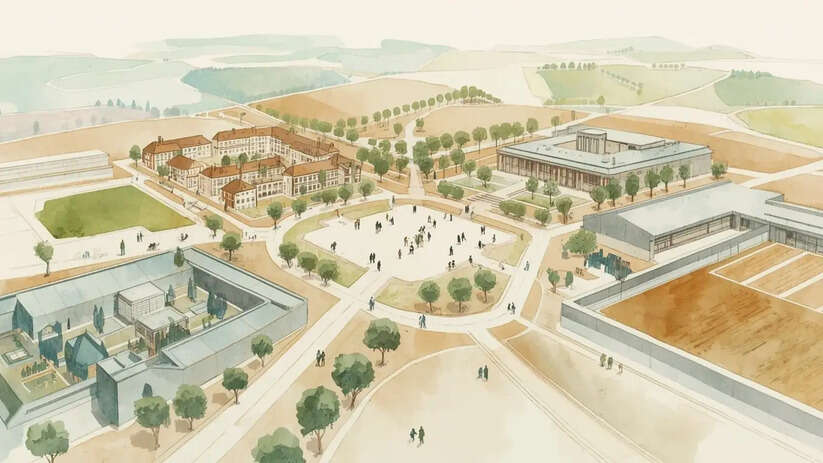
-
Every human activity happens somewhere:Shared Space provides the physical, digital, social, economic or institutional setting in which people and organisations operate.
-
Six families of Shared Space:Physical and territorial, digital and informational, economic and market, social and relational, institutional and jurisdictional, and commons and transboundary spaces.
-
Sharing does not always mean common ownership:A space can contain many participants while remaining privately owned, publicly governed or subject to restricted access.
-
One activity can occupy several spaces:An online purchase may connect a home, a digital marketplace, a bank, a warehouse and multiple legal jurisdictions.
-
Space, activity and law belong together:Shared Space explains where activity happens, the sixteen exchange families explain how value moves, and the Twenty-Four Laws help explain the legal relationships governing both.
SHARED SPACE: WHERE HUMAN LIFE, WORK AND EXCHANGE TAKE PLACE
Understanding the Six Families of Shared Space and the Environments That Connect Human Life
Abstract
Every human activity takes place somewhere. A farmer cultivates land, a child studies in a classroom, a shopkeeper sells goods in a market, a company operates through an office, and a customer purchases products through a digital platform. These activities may appear unrelated, but all depend upon environments in which people, resources, institutions and relationships exist.
This article introduces Shared Space as a simple way of understanding those environments. Shared Space includes physical locations such as villages, streets and buildings, but also digital networks, economic markets, social communities, institutional settings and spaces extending across national boundaries. The idea is that human activities can be understood more clearly when we examine not only what people do, but also where and under what conditions they do it.
Six broad families of Shared Space are proposed for educational and research purposes. They are not six legally established categories, nor are they mutually exclusive. They provide a common language for understanding how different environments make human activity, cooperation, exchange and governance possible.
PART I — WHAT IS SHARED SPACE?
1. Every activity needs a setting
Imagine a busy marketplace on an ordinary morning. Shopkeepers arrange their goods, customers walk through the market, delivery vehicles arrive, workers unload materials, and payments take place between buyers and sellers. The market is not simply a collection of shops. It is a shared environment in which many participants use space, resources and facilities while pursuing their own purposes.
Now imagine the same marketplace operating through a mobile application. Customers may remain at home, sellers may work from distant warehouses, payment services may operate through banking networks, and delivery workers may move goods across the city. The exchange continues, but the activity now occupies several interconnected physical and digital environments.
These examples reveal the central idea of Shared Space: human activities occur within environments that connect people, resources and institutions.
2. Does shared mean that everyone owns it?
Not necessarily. A privately owned shopping centre is shared by its visitors, businesses, employees and service providers, even though those participants do not jointly own the building. A public road may be accessible to many people but remain subject to traffic rules, restrictions and public administration.
Similarly, a digital platform may connect millions of users while being operated by a private company. A university may bring together students, teachers and researchers while controlling access to particular laboratories or facilities. A shared environment therefore does not automatically imply common ownership or unrestricted access.
The important point is that several participants coexist or engage with one another within a common environment. Their rights of entry, use, ownership, control and participation may be very different. These differences are essential to understanding how Shared Space operates.
3. What makes a space important?
A location becomes economically and socially significant through what it enables people to do. A village road connects households to markets and schools. A railway station connects travellers, businesses and distant places. A hospital brings together patients, medical professionals, equipment and institutional responsibilities.
Some spaces are valuable because of their natural resources, while others are valuable because of accessibility, infrastructure, knowledge or social relationships. The same physical location may support many activities over time. A school building, for example, may host education during the day and a community meeting in the evening.
Shared Space therefore concerns much more than geographical area. It also concerns the opportunities, connections, restrictions and relationships associated with a particular environment.
PART II — THE SIX FAMILIES OF SHARED SPACE
FAMILY 1 — PHYSICAL AND TERRITORIAL SPACE
The space occupied by land, buildings, natural resources and physical infrastructure.
Physical and territorial space is the most familiar kind of Shared Space. It includes villages, cities, agricultural fields, forests, rivers, buildings, roads, ports and industrial areas. These are the places where people live, travel, build, produce and obtain many essential services.
Consider a piece of agricultural land. A farmer may cultivate crops upon it, workers may assist with production, a road may connect it to a market, and an irrigation system may supply water. The productivity of the land depends not only upon its physical qualities but also upon access, infrastructure and the conditions governing its use.
Physical space is also limited. Two activities may compete for the same land, water or infrastructure, creating questions of planning, environmental protection, ownership and public interest. Property and land-use laws therefore become important in determining what may lawfully occur within a physical environment.
Typical examples: Agricultural land, housing colonies, factories, highways, public parks, railway stations and commercial buildings.
FAMILY 2 — DIGITAL AND INFORMATIONAL SPACE
The environments created through computing, communication and information networks.
Digital space allows people to interact without being physically present in the same place. Websites, digital marketplaces, online classrooms, communication platforms, databases and cloud computing systems create environments in which information and services can be accessed and exchanged. These environments may extend across geographical boundaries.
Consider a student attending an online class. The student may be sitting in a village while the teacher is located in another city. Both participate in a shared educational activity through a digital platform, even though they occupy different physical locations.
Digital spaces also have boundaries and rules. Access may require an account, a password, a subscription or institutional permission. The collection and use of personal information may be subject to data protection and other applicable legal requirements.
Typical examples: Online marketplaces, social networks, virtual classrooms, banking applications, digital government portals and collaborative software platforms.
FAMILY 3 — ECONOMIC AND MARKET SPACE
The environment in which people and institutions participate in economic relationships.
Economic space is not necessarily one physical location. It may consist of buyers, sellers, employers, workers, investors, lenders, producers and consumers connected through economic opportunities and transactions. A market can therefore extend far beyond a particular building or trading area.
Consider a manufacturer supplying electronic equipment to schools across India. The company may operate from one city, purchase components from several States and receive orders from customers located throughout the country. All these participants belong to an interconnected economic environment, even though they never gather at one physical location.
Economic spaces may be organised around particular products, skills, services or financial activities. Labour markets connect workers with employers, credit markets connect borrowers with lenders, and supply chains connect producers with customers. Competition, access to finance, transportation and information can influence who participates and under what conditions.
Typical examples: Agricultural markets, labour markets, financial markets, industrial supply chains, export markets and professional service markets.
FAMILY 4 — SOCIAL AND RELATIONAL SPACE
The environment formed through human relationships, communities and shared social life.
Human beings do not participate in the economy only as buyers and sellers. They also exist within families, neighbourhoods, communities, associations and social networks. These relationships influence how people learn, cooperate, share knowledge, provide care and support one another.
Consider a community in which neighbours organise assistance during a flood. People contribute their time, vehicles, food and skills to help affected households. Important operations and interactions occur even though many participants receive no commercial payment.
Social space therefore contains relationships that cannot always be understood as economic transactions. Friendship, care, trust, community participation and collective responsibility are valuable aspects of social life. Some have legal consequences, but their significance is not limited to measurable income or market value.
Typical examples: Families, neighbourhoods, community associations, self-help groups, voluntary networks and social institutions.
FAMILY 5 — INSTITUTIONAL AND JURISDICTIONAL SPACE
The environment in which organised institutions exercise responsibilities and lawful authority.
Institutional space is created by the activities and responsibilities of organisations. A university, court, hospital, government department, company or regulatory institution may have defined functions, participants and procedures. Some institutional spaces are physical, while others exist through organisational or digital arrangements.
Consider a court hearing a dispute between two companies. The court operates within a legal jurisdiction, follows applicable procedures and exercises powers conferred by law. The parties, lawyers, witnesses and judicial officers participate in an institutional setting with defined rights and responsibilities.
Government offices and public institutions offer another example. A department may operate from a building, but its lawful authority does not depend solely upon the location of that building. Its powers arise from the Constitution, statutes and applicable legal arrangements.
Typical examples: Courts, legislatures, government departments, universities, public authorities, hospitals and institutional decision-making systems.
FAMILY 6 — COMMONS AND TRANSBOUNDARY SPACE
The environments in which resources, activities or interests extend across communities and territorial boundaries.
Some spaces are shared by communities through legally recognised or customary arrangements. Others extend across States or countries and require cooperation among multiple jurisdictions. Rivers, migratory ecosystems, international transport routes and parts of the global environment illustrate different aspects of this family.
Consider a river flowing through several States. Farmers, towns, industries and ecosystems may all depend upon its water. Decisions concerning its use in one area may affect people and natural systems elsewhere, making the river a shared resource with complex legal and environmental relationships.
International digital networks provide another example. A company may serve customers in several countries through one platform, but the transactions may be subject to different applicable laws. Shared access does not eliminate territorial jurisdiction or national legal responsibilities.
Typical examples: Community resources, interstate river systems, international transport corridors, cross-border networks and relevant global commons.
PART III — SIX SPACES, BUT MANY OVERLAPPING REALITIES
4. One person can occupy several spaces
Consider a teacher working at a school. The teacher occupies a classroom within physical space and belongs to a school within institutional space. The employment relationship also exists within economic space, while the teacher participates in social relationships with colleagues and students.
If the teacher delivers lessons online, digital space becomes part of the same activity. The lesson may therefore involve several forms of Shared Space at once. This does not mean that several separate lessons have occurred.
The six families provide different ways of understanding the same activity. They should not be treated as six isolated worlds.
5. Shared Space has boundaries
Boundaries explain where one environment ends and another begins, but not all boundaries are physical walls. A factory may have a boundary fence, while a digital service may have account permissions. A regulated industry may have licensing conditions, and a court may have legally defined territorial or subject-matter jurisdiction.
These boundaries influence who may participate and what they may do. Some protect legitimate interests, safety, privacy or public resources. Others may create barriers that restrict opportunities or produce unfair exclusion.
Understanding Shared Space therefore requires examining not only what a space contains, but also who can enter it, who controls it and which rules govern its use.
6. Shared Space can change over time
A village may become a town, an agricultural field may become an industrial area, and a traditional market may develop a digital sales channel. These changes alter the participants, infrastructure and relationships associated with the space. New economic possibilities may emerge, while existing uses or communities may also be affected.
The transformation of space is therefore not merely construction or technological change. It may involve altered ownership, planning permissions, public infrastructure, environmental conditions and social relationships. Different legal processes may be necessary depending upon the proposed transformation.
Time is consequently an important dimension of Shared Space. The environment observed today may differ substantially from the environment that existed when an earlier right, obligation or transaction arose.
PART IV — FROM SHARED SPACE TO HUMAN ACTIVITY
7. Operations: What people do
An operation is an activity performed by a person or institution. A farmer planting seeds, an engineer designing a machine, a student reading a book and an officer examining an application are all undertaking operations. These activities may occur without any immediate exchange of money or property.
The relevant shared space helps explain the conditions under which the operation takes place. A farmer requires access to land, while an engineer may require technical equipment or digital tools. A government officer must exercise the relevant institutional responsibilities within the applicable legal framework.
Operations can create goods, knowledge, services, decisions or changes in the condition of resources. Their significance is not limited to commercial output.
8. Interactions: How people relate to one another
An interaction arises when the actions or interests of participants meet or affect each other. Two neighbours discussing access to a road are interacting, even if neither pays the other. A regulator inspecting a factory and a patient consulting a doctor are also participating in interactions, though their legal relationships are very different.
Interactions may involve cooperation, competition, negotiation, disagreement, assistance or the lawful exercise of authority. Some lead to exchanges, while others lead to decisions, disputes or continuing obligations. Human relationships cannot therefore be described entirely through commercial transactions.
Shared Space provides the setting in which many of these interactions become possible. The nature of the space can influence which participants meet, how they communicate and what responsibilities apply.
9. Exchanges: How value moves
An exchange occurs when goods, services, money, rights or other relevant benefits are provided, transferred or promised between participants. A shopkeeper selling goods, an employer paying wages and a bank providing a loan are familiar examples. Different exchanges create different rights, obligations and economic consequences.
The companion Swarnpath article, “The 16 Families of Human Exchange: How Value Moves Through the Economy,” explains sixteen major families of these relationships. They include labour, construction, professional and technical services, rent, brokerage, insurance intermediation, property, goods, digital marketplaces, lending, debt securities, equity, prizes, virtual digital assets and barter.
Read the companion article:
https://swarnpath.com/educational-impact/the-16-families-of-human-exchange-how-value-moves-through/cid19410079.htm
Shared Space tells us where these activities occur. Operations describe what participants do, interactions describe their relationships, and exchanges explain important forms of value movement.
PART V — SHARED SPACE AND THE LAW
10. Who owns, controls or governs a space?
Ownership, access, control and legal jurisdiction are different ideas. The owner of a building may permit tenants or visitors to use it, but ownership does not necessarily confer unrestricted power to regulate every aspect of their conduct. A government may possess regulatory authority over a territory without owning every private property situated within it.
Digital platforms demonstrate the same distinction. A company may operate a platform and establish lawful terms of service, while users retain rights under applicable legislation. The State may regulate specified activities without becoming the owner of the platform or its contents.
Understanding Shared Space therefore requires careful attention to legal rights and institutional authority. These distinctions become particularly important where private ownership, public access and regulatory responsibilities overlap.
11. How do the Twenty-Four Laws enter Shared Space?
The proposed Twenty-Four Laws framework provides a way to study selected legal arrangements affecting people, productive resources, institutions and activities. Property and environmental laws help govern the use of physical spaces, while labour and enterprise laws govern many activities taking place within workplaces and markets. Data and network-related laws may apply to aspects of digital participation.
Entity Law helps identify the legal character of participants, including companies, partnerships, governments and other recognised arrangements. Operational Government Law examines how public institutions exercise authority, mobilise resources and undertake authorised expenditure. Limitation Law determines the legal consequences of specified periods and delays.
These laws do not create a single universal code of Shared Space. Instead, they provide different legal perspectives that can be brought together when examining a particular place, relationship or activity.
PART VI — WHY SHARED SPACE MATTERS
12. Understanding economic development
Economic development often involves changes in the spaces available to people. A new road may connect farmers with markets, a digital network may connect students with educational resources, and an industrial area may connect enterprises with workers and infrastructure. Such improvements can change the opportunities available within an economy.
The relationship is not automatic. Infrastructure may be inaccessible, investment may fail to create expected benefits, and development may impose environmental or social costs. A credible assessment must therefore examine who benefits, who bears costs and whether legal obligations have been respected.
Shared Space offers a way to organise these questions without assuming that every expansion of economic activity is beneficial.
13. Understanding participation and opportunity
Two people may possess similar skills but face very different opportunities because of the spaces they can access. One may live near educational institutions, reliable transport and established markets, while another may face geographical isolation or weak connectivity. Digital infrastructure can reduce some barriers, although access to devices, services and skills remains important.
The concept of Shared Space therefore helps connect geography with economic opportunity. It also shows how social relationships, institutional arrangements and market access influence participation. Understanding these conditions may help improve the design of public services and productive infrastructure.
14. Understanding conflict and cooperation
Shared spaces bring different interests together. Residents may seek quiet neighbourhoods, businesses may need transportation access, farmers may require water, and public authorities may pursue infrastructure development. These interests can be compatible, but they may also conflict.
Law provides processes for resolving many of these differences, while communities and institutions may also develop cooperative arrangements. Neither conflict nor cooperation is unique to economic markets. Both occur throughout physical, digital, social and institutional life.
A useful framework must therefore recognise the full range of human relationships occurring within Shared Space.
CONCLUSION — THE SPACE IN WHICH HUMAN LIFE UNFOLDS
Shared Space is a simple idea with broad significance. Human beings do not live, work, learn, cooperate or exchange in isolation from their environments. They participate in physical territories, digital networks, economic markets, social communities, institutions and spaces that cross established boundaries.
The six proposed families provide a way to understand these environments without assuming that they are separate or uniformly governed. A single activity may occupy several spaces, and the same space may support many different activities. Ownership, access, control, jurisdiction and legal responsibility may also belong to different persons or institutions.
Shared Space becomes especially useful when connected with the wider study of human activity. Operations explain what participants do, interactions explain how their conduct and interests relate, and the sixteen exchange families explain important movements of economic value. The Twenty-Four Laws provide a further framework for examining the legal conditions under which these relationships operate.
The central idea is simple: before we can fully understand what people do and what they exchange, we must understand the spaces in which their lives and activities meet.